Commercial Waste in Forest Gate
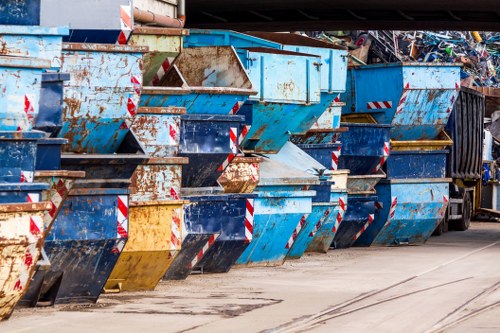
Commercial waste in Forest Gate needs a practical, reliable approach that keeps day-to-day operations moving while materials are handled responsibly. We provide a focused service for business premises that may generate mixed refuse, bulky items, recyclable materials or regular commercial collections. The aim is straightforward: make disposal simpler, keep spaces clear and help you manage waste streams in a way that suits the type of work your premises produces.
Our service covers common business settings such as shops, offices, trade premises, hospitality spaces and shared workplaces. Some customers need a one-off clearance after a refit or tidy-up, while others are looking for repeat removal of accumulated waste. We can deal with mixed commercial waste, separate items that should be handled differently and remove materials that need careful sorting before onward disposal. If you are comparing options, a clear outline of the items, access and timing helps us prepare an accurate quotation. Start with what needs taking away, then we can discuss the most suitable collection plan.
If you are looking for a clean, efficient way to clear unwanted business waste in Forest Gate, our team can help you plan the job and move it forward. You can use the pages on this site to learn more about the types of waste we handle, compare related services and decide what best suits your premises. When you are ready, request a quotation and we will take the next step with you.
Business waste removal for regular and one-off needs
Commercial waste removal is often needed for more than just a single load. A business may have periodic clear-outs, packaging after deliveries, shop waste that builds up through the week or items left behind after an internal change. Our approach is designed to suit that variety. We can collect waste from workplaces that need a single removal as well as premises that prefer a recurring arrangement. Where different materials are present, we look at what can be separated for recycling and what should go to the appropriate disposal route.
For businesses planning ahead, it helps to think in practical terms: the volume involved, the type of waste, where it is stored and how access works on the day. That is especially useful when the load includes mixed items rather than a single stream. Common questions include whether the waste is bagged, boxed or loose, whether it is being moved from a ground-floor area or an upper level, and whether there are any restrictions on parking or loading. Business waste removal is a useful starting point if you want to understand this service in more detail before asking for a quote.
Good preparation does not need to be complicated. A short list of the waste types, a rough idea of quantity and a note of anything awkward to move is often enough to begin. If you have photos or an inventory, they can help, but they are not always essential. The more clearly the waste is described, the easier it is to match the collection to the job and keep the quotation focused on the actual work required. For many customers, that is the simplest route to a sensible plan. Tell us what needs clearing and we can take it from there.
Office clearance and workplace tidy-ups

Office clearance can involve desks, seating, filing, storage units, old equipment, archive materials and general rubbish left behind after a move, refurbishment or reorganisation. We also help with workplace tidy-ups where the main goal is to make rooms usable again and remove accumulated items that are no longer needed. The work is often easier when broken into zones: reception areas, meeting rooms, storage spaces and back-office rooms can each be assessed separately so the clearance stays orderly.
Different workplaces create different waste profiles. An office may mainly have paper-based waste and packaging, while a larger commercial unit may also include IT hardware, fixtures or mixed furniture. Items with different handling needs should be identified early, especially where they may need separating before removal. Office clearance provides a more focused route for businesses wanting a clear workspace without having to sort everything alone. We can also discuss whether some items are better set aside for reuse, recycling or disposal.
- Furniture such as desks, tables, chairs and cabinets
- Paper and archive materials that need removal
- Mixed office waste from cupboards, shelves and shared areas
- Items left after moves, reorganisations or internal changes
Furniture, fixtures and bulky items
Commercial premises often build up furniture and bulky items that are no longer needed but still take up useful space. These may include workstations, shelving, waiting-room seating, display units or old storage pieces. Bulky removals need practical handling because the shape, weight and access conditions can matter as much as the quantity. We can remove these items as part of a wider business clearance or as a separate collection where only furniture is involved.
When furniture forms part of the job, the route through the property is worth thinking about in advance. Narrow corridors, stairs, shared entrances and limited loading areas can all affect the time required and the most efficient way to carry items out. Furniture clearance is a helpful page if your main concern is getting rid of large items in a tidy, organised way. The same applies to specific pieces that may need special handling because of their size or condition.
Not every bulky item is identical, and that is why an accurate description is helpful. A single heavy unit may be more awkward than several smaller items, while a room full of light furniture can still take time if it needs to be moved through restricted access. You do not need to draft a long explanation; just give enough detail to show what the removal involves. That allows the quotation to reflect the real work rather than a general guess. Clear item descriptions usually make the process smoother for everyone.
Waste from refits, refurbishments and trade work

Commercial premises often generate waste during fit-outs, refurbishments, repairs or alterations. This can include packaging, offcuts, old fittings, broken fixtures and general debris that needs removing once the work is complete. Where the load is mixed, the removal plan should allow for materials that may need separating before disposal. We can help with waste created by light building work, internal reconfiguration and other trade-related activity in and around business premises.
Some clearance jobs are best arranged around the stage of the project rather than left until the end. For example, a workspace being refurbished may need waste taken away in stages so the area remains manageable, whereas a final clean-out after completion may suit a single visit. Builders waste clearance is relevant when your commercial waste includes heavier remnants from work carried out on the property. It is a practical option where general business waste is mixed with trade-related material.
Where refurbishment waste is involved, it helps to note whether the materials are loose, bagged, boxed or stacked, and whether any items are awkward to reach. Clear access details can influence how the job is planned, especially if work is taking place during business hours. If a project has several waste-producing phases, it may be easier to discuss them together rather than treating each load separately. That kind of planning can save time later and helps keep the process orderly.
Household-style clearances for business-owned spaces
Some commercial premises also involve household-style contents, especially where a property contains a flat above a shop, a staff room with domestic appliances or an office that stores mixed personal and workplace items. In those situations, the removal needs may look more like a clearance than a standard bin collection. We can help with unwanted contents, mixed items and bulky belongings where the job requires more than ordinary refuse handling.
When the contents are varied, it is sensible to think about what stays, what goes and what needs to be separated. The same principle applies whether the items are stored in a back room, an upper floor or a shared area. Flat clearance and similar services are useful references when a business-owned or mixed-use property contains domestic-style possessions that need clearing efficiently and with care. That can include furniture, small appliances and general household-type items.
If you are uncertain how to categorise a mixed set of contents, do not worry about perfect terminology. A short description of the items and their location is usually enough to begin. The important part is that the removal is based on what is actually present rather than on a broad label. In commercial settings, that distinction can matter because the right clearance approach depends on the contents themselves. Describe the items plainly and the next step becomes easier to organise.
Appliances, fittings and specialist item handling
Some commercial waste includes appliances, fittings or other items that cannot simply be treated as ordinary rubbish. Fridges, freezers, vending units, electrical items and fixed fittings may all need a more considered approach, particularly if they are bulky or awkward to move. We can remove these items as part of a broader clearance or as a separate collection when they are the main thing that needs taking away.
Specialist items often raise practical questions about size, access and whether they are disconnected or ready for removal. If the item is part of a fitted arrangement, it may need to be released before it can be moved. Fridge and appliance removal is useful if your business waste includes equipment that is too large for routine handling. The same applies to items that are heavy but still need to be removed cleanly and without unnecessary disruption.
Where appliances or fittings are concerned, a brief note about their condition can help. If there are multiple items, it is worth identifying the largest or most awkward piece first. That gives a clearer picture of the work and may shape the order in which items are taken out. For mixed business loads, this type of detail can be just as helpful as the overall volume. It keeps the quotation anchored to the actual task rather than a general category.
Hazard-sensitive waste and careful sorting

Not all commercial waste can be handled in the same way. Some loads may contain items that need extra care because of their contents, condition or disposal requirements. Where the material is potentially sensitive, the first step is to identify it clearly so the right handling route can be considered. We can discuss waste that requires sorting away from ordinary mixed refuse and help you understand what should be kept separate.
This kind of work is especially important when a business has a mix of normal rubbish and items that should not be treated as standard waste. Careful description matters here because it helps avoid assumptions about what is included. Hazardous waste disposal is a relevant page if your commercial load includes material that needs particularly cautious handling. It is best to treat such items distinctly rather than folding them into a general clearance request.
For customers, the key point is to identify anything unusual early and avoid placing it with ordinary rubbish until the handling route is clear. That does not mean every unusual item will be hazardous, only that some waste requires a more precise conversation. If you are unsure, say so in your enquiry and list the materials as accurately as you can. The aim is to get the right service for the job, not to force a quick label onto something that needs checking.
About Forest Gate
Forest Gate is a district in the London Borough of Newham, in east London, known historically as part of the ancient parish of West Ham. Its identity grew strongly during the nineteenth century as the railway age brought new routes, housing and local commerce to the area. The district takes its name from the former gate that marked a boundary in Epping Forest, and that older connection still gives the place a recognisable historical thread. Forest Gate is now closely associated with a dense urban landscape of terraced streets, mixed residential blocks and small commercial frontages that reflect successive phases of London growth. The area sits within a wider pattern of east London development shaped by industry, migration and transport change, yet it has kept a local character centred on everyday neighbourhood life rather than grand civic monuments. One of the best-known landmarks nearby is the Wanstead Flats section of Epping Forest, a large open space to the north that offers broad grassland and long views uncommon in inner city settings. Forest Gate station sits on the busy cross-London rail corridor and remains an important local transport point, linking the district with Stratford, central London and Essex destinations. The streets around the station and Green Street have long reflected the area’s role as a lived-in, working part of the capital, with shops, services and community venues woven into the fabric of the neighbourhood. Cultural life in Forest Gate is shaped less by single headline attractions than by the layered everyday experience of markets, local roads, parks and faith buildings that serve a diverse population. Its architecture includes Victorian and Edwardian housing alongside newer redevelopment, and that blend gives the district a varied townscape. As with much of Newham, Forest Gate reflects London’s continual adaptation, where older residential patterns sit beside modern amenities and changing business use.
Planning a commercial clearance
Commercial waste work tends to run more smoothly when the job is described in a practical sequence. First, identify the main items and any separate categories; second, think about where they are stored and how they will be reached; third, note anything that may need extra care, such as fragile objects, heavy units or awkward access. That outline is usually enough to produce a sensible quotation and avoid uncertainty on the day. If you are comparing services, use the scope of the load rather than just the number of items as your guide.
For some businesses, a clearance is best organised around a change in use, such as a move, refurbishment, stock reduction or rearrangement of rooms. For others, the need is more routine: waste just gathers in the background until it starts to take up time and space. Either way, the decision is usually simpler when you know what kind of waste you have and what outcome you want. Waste removal can be a useful overview page if you are considering whether the job is a one-off clearance or part of a broader disposal plan.
If you are still unsure how much detail to provide, start with the essentials and let the conversation build from there. A short list, a rough quantity and a note on access are often enough to move forward. You do not need to over-explain the history of the items or prepare a perfect inventory. Useful detail, not excess detail, is what helps keep a quotation accurate and the collection practical.
Quotations, pricing factors and next steps

Commercial waste quotations usually depend on the type of material, the amount to be removed, how easy it is to access and whether any items need to be handled separately. Time on site may also vary according to loading conditions, sorting and the nature of the premises. That is why two jobs that look similar at first glance can still require different planning. A clear description of the waste leads to a more useful quotation than a brief label alone.
If your load includes several categories, it can help to group them before you ask for a price. For example, bulky furniture, packaging, office materials and specialist items may each influence the job in a different way. Pricing and quotes is a sensible page to review when you want a better idea of how quotations are prepared. It can support your decision before you move on to the actual request. contact us is the final step when you are ready to ask for a quotation or discuss the waste you need removed.
When you send an enquiry, focus on the essentials: what needs to go, where it is located, whether access is straightforward and whether there are any particularly awkward items. That is usually enough to begin. If you want to keep things simple, a brief message is perfectly acceptable. The main aim is to arrange the right commercial waste service for your premises in Forest Gate and make the process as clear as possible from the outset.